
Speed, balance, and coordination are essential skills for modern soccer players. However, developing these abilities requires more than simply running faster or practicing ball passing. Soccer Agility Rings provide a versatile and engaging way to improve footwork, body control, reaction speed, and movement efficiency. From beginner-level coordination exercises to advanced speed and agility drills, these lightweight training tools help players build a stronger athletic foundation. This guide explores their benefits, practical training methods, equipment selection, and ways to incorporate agility ring exercises into an effective soccer training routine.
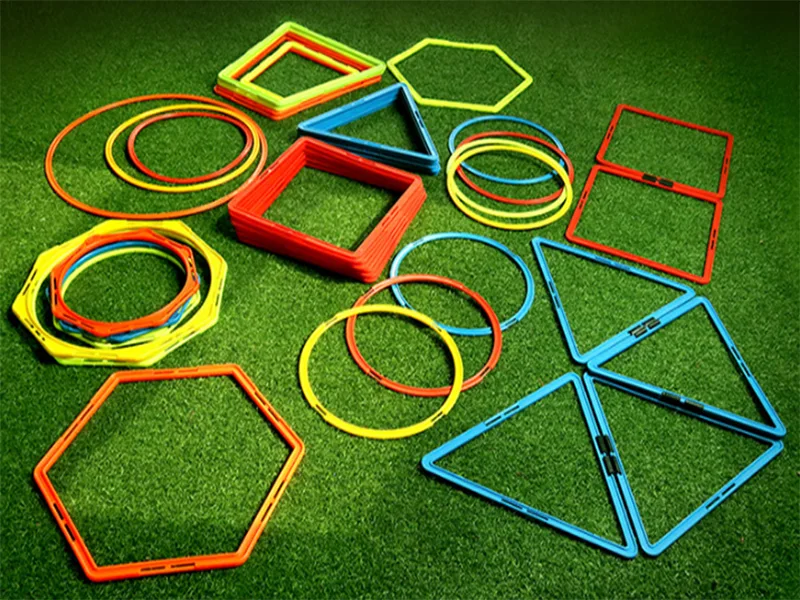
Soccer is a sport that demands constant movement. Players accelerate, slow down, change direction, avoid opponents, and reposition themselves within seconds. These movements require coordinated footwork, lower-body strength, balance, and quick reactions. Soccer Agility Rings are practical training accessories designed to help athletes develop these fundamental movement abilities.
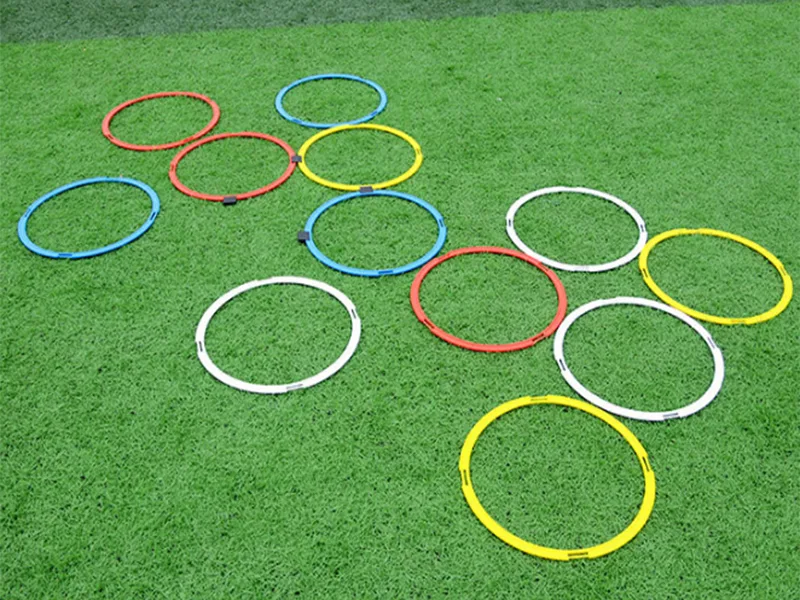
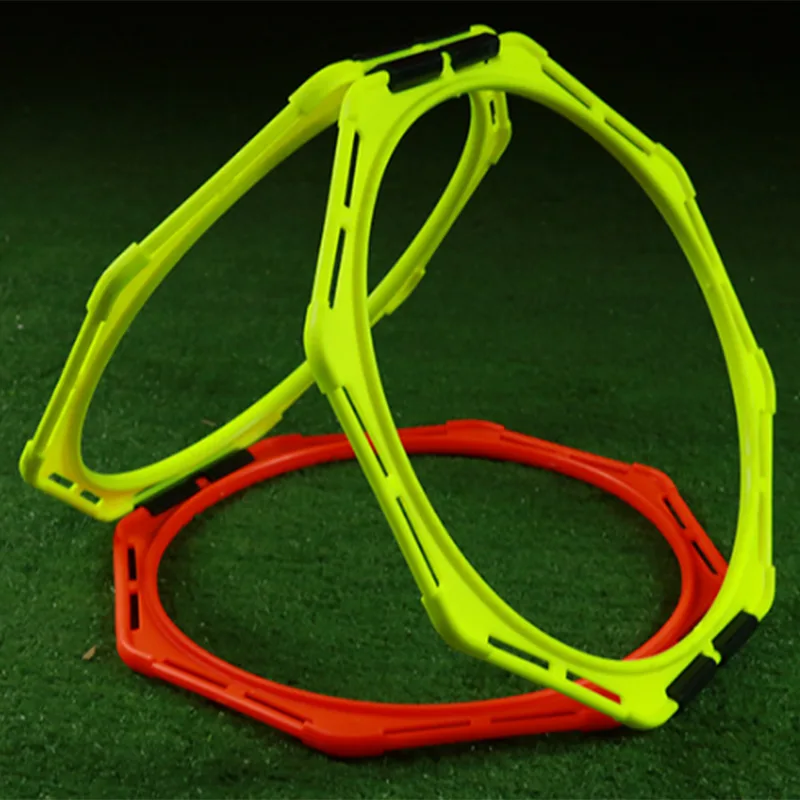
Typically manufactured from lightweight, flexible, and durable materials, agility rings are circular training markers that can be arranged in different patterns on a flat training surface. Unlike fixed training equipment, their flexible layout allows coaches to create customized drills according to players' ages, skill levels, and training objectives.
Players can step through the rings, jump between them, perform lateral movements, or combine footwork exercises with ball control activities. By adjusting the distance, direction, and sequence of the rings, coaches can gradually increase exercise difficulty without requiring complicated equipment.
The basic training principle is straightforward: each ring creates a designated movement target. Players must coordinate their feet and body position to move through the arranged pattern while maintaining balance and control.
For example, a straight-line arrangement encourages forward footwork and rhythm, while a zigzag pattern challenges lateral movement and directional changes. Circular or multidirectional layouts can also be used to develop spatial awareness and reaction skills.
Soccer performance is influenced by several interconnected physical abilities. Straight-line speed is important, but it does not fully represent how quickly a player can respond during a competitive match.
A midfielder may need to turn away from an approaching opponent, while a defender must adjust their position to follow an attacking player. A winger might accelerate, stop, and change direction before delivering a cross. Each situation requires more than running ability.
| Physical Ability | What It Means | Soccer Application |
|---|---|---|
| Speed | The ability to move quickly from one position to another. | Sprinting toward the ball or accelerating into open space. |
| Agility | The ability to change direction efficiently while maintaining body control. | Evading defenders and adjusting positioning. |
| Coordination | The ability to organize different body movements smoothly. | Combining footwork with dribbling and passing. |
| Balance | The ability to maintain stability during movement or position changes. | Staying controlled when turning, stopping, or challenging an opponent. |
| Reaction Speed | The ability to respond quickly to an external signal or situation. | Reacting to a loose ball or an opponent's movement. |
These abilities work together during a soccer match. Developing them through structured drills can help players move with greater confidence and prepare for the unpredictable nature of the game.
Running drills are useful for cardiovascular conditioning and straight-line speed development. However, they may not provide sufficient practice in multidirectional footwork, controlled deceleration, or rapid changes in movement patterns.
Agility rings introduce clear movement targets and allow players to practice a wider range of footwork patterns. They are particularly useful when coaches want to add variety to warm-ups, technical sessions, or athletic development programs.
One of the biggest advantages of agility rings is their versatility. A relatively simple set of rings can support multiple training activities, making it easier to create progressive exercises without investing in large or complicated equipment systems.
Accurate foot placement is important for controlling movement on the soccer field. Agility ring exercises encourage players to pay attention to where their feet land and how they transition between steps.
Repeated practice can help develop smoother movement patterns, better stepping rhythm, and greater awareness of lower-body positioning.
Rapid directional changes place demands on the muscles responsible for stabilizing the body. Exercises involving forward steps, lateral movements, and single-leg landings provide opportunities to practice balance under controlled conditions.
This type of training can support more stable movement mechanics, particularly when players need to slow down or change direction.
Soccer players rarely move in straight lines throughout an entire match. They frequently move sideways, diagonally, backward, and forward depending on the ball and their opponents.
By arranging rings in different directions, coaches can introduce movement patterns that encourage players to practice changing direction while maintaining control.
Repeating the same exercises can make training sessions less engaging. Agility rings allow coaches to introduce different patterns, timed challenges, partner activities, and competitive circuits.
For younger players, colorful rings can also make footwork exercises easier to understand and more enjoyable to complete.
Beginners can start with simple stepping patterns, while experienced athletes can perform faster sequences, multidirectional movements, or ball-integrated drills.
This flexibility makes soccer agility rings useful for individual practice, school sports programs, youth academies, and professional training environments.
Getting the most out of agility rings requires selecting exercises that match specific training goals. The following drills provide a practical starting point for players and coaches.
Objective: Develop fundamental footwork and movement rhythm.
Training tip: Beginners should prioritize accurate foot placement before increasing speed.
Objective: Practice coordinated foot placement and controlled landing.
Training tip: Keep the jumps controlled and avoid excessive landing noise, which can indicate poor landing mechanics.
Objective: Develop lateral movement and coordination.
Training tip: Avoid crossing the feet unnecessarily. Focus on controlled lateral movement.
Objective: Practice directional changes and spatial awareness.
Training tip: Increase movement speed gradually while maintaining accurate foot placement.
Objective: Improve single-leg stability and body awareness.
Training tip: Begin with short balance holds. Players should not sacrifice stability to complete the exercise faster.
Objective: Develop movement responses and decision-making speed.
Training tip: This drill works particularly well for group sessions because players must listen, process information, and respond through movement.
Objective: Connect footwork development with basic soccer techniques.
Training tip: Players should gradually increase the complexity of the movement pattern while maintaining close ball control.
Using agility rings effectively is not about performing as many repetitions as possible. A well-organized training routine should include a warm-up, progressive exercises, sufficient recovery, and a clear objective.
| Training Stage | Activity | Suggested Duration |
|---|---|---|
| Warm-up | Light jogging and dynamic mobility exercises. | 5 minutes |
| Basic Footwork | Forward stepping and two-foot jumping. | 5 minutes |
| Directional Movement | Lateral stepping and zigzag drills. | 6 minutes |
| Reaction Training | Coach-directed movement exercises. | 4 minutes |
| Ball Integration | Dribbling through the ring arrangement. | 5 minutes |
This schedule is a general example rather than a fixed training prescription. Coaches should modify the workload based on the players' physical condition, technical ability, and overall training program.
A useful way to structure agility development is to introduce new challenges gradually.
Players should be able to perform each movement with reasonable control before moving to a more demanding variation. Adequate recovery between intense repetitions is also important for maintaining movement quality.
Not all agility rings provide the same training experience. When purchasing equipment for a soccer club, school, academy, or personal training program, it is important to consider material quality, flexibility, durability, size, and storage requirements.
Agility rings are frequently moved, stacked, transported, and placed on different training surfaces. Their material should be sufficiently durable to withstand repeated use.
Look for products made from suitable flexible materials that can maintain their shape during normal training activities. Smooth edges and consistent construction are also important considerations, particularly for equipment used by younger athletes.
Rings should be flexible enough to handle routine movement and storage without becoming easily deformed. However, flexibility should not compromise their ability to remain recognizable and functional during training.
For sports clubs that conduct frequent outdoor sessions, product consistency and material performance are especially important.
The appropriate size depends on the intended users and the exercises being performed.
These are general training considerations rather than universal size requirements. Coaches should select equipment based on player dimensions, available space, and exercise objectives.
Bright, contrasting colors make ring positions easier to identify, especially during fast-paced exercises. Different colors can also help coaches create numbered sequences, directional challenges, or team-based activities.
For outdoor sessions, visibility against grass, artificial turf, and other training surfaces should be considered before selecting a color combination.
Training equipment should be easy to transport and organize. Lightweight rings that can be stacked or packed together help coaches prepare training areas efficiently.
For schools, sports academies, and clubs with limited storage space, compact packaging can be an additional purchasing advantage.
Although agility rings are relatively simple to use, poor training habits can reduce their effectiveness and increase unnecessary physical stress. Coaches and athletes should pay attention to the following issues.
Moving quickly through a ring sequence does not automatically mean that a player is developing better agility. If foot placement becomes inaccurate or posture deteriorates, the exercise may lose its intended training value.
Start at a manageable speed and increase intensity only when the movement pattern is consistent.
Repeating one basic drill may become monotonous and limit exposure to different movement patterns. Change the arrangement, direction, and exercise sequence to create more comprehensive sessions.
Sudden high-intensity jumping and directional changes can place considerable demands on the lower body. Begin with appropriate dynamic warm-up activities and allow sufficient recovery between demanding rounds.
Uneven, slippery, or unstable surfaces can interfere with foot placement and increase the risk of losing balance. Use a clean, level training area with sufficient space around the equipment.
Agility ring exercises are useful for developing movement skills, but they should not replace ball work, tactical instruction, passing practice, or game-based training. The best results come from integrating physical development with soccer-specific activities.
Agility rings become even more versatile when incorporated into a broader training setup. Combining different accessories allows coaches to design exercises that develop multiple physical and technical abilities within the same session.
| Equipment | Training Focus | Combined Exercise |
|---|---|---|
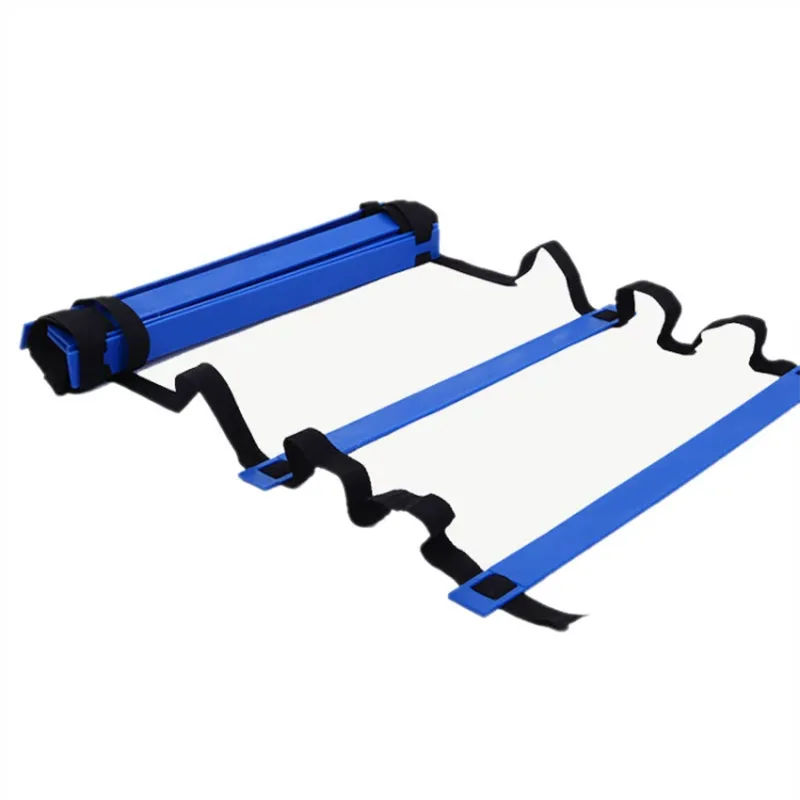
| Agility Ladder | Footwork rhythm and coordination. | Move through ladder steps before transitioning into agility rings. |
| Training Cones | Directional changes and spatial awareness. | Complete a ring sequence before weaving between cones. |
| Soccer Ball | Dribbling and ball control. | Navigate ring patterns while maintaining possession. |
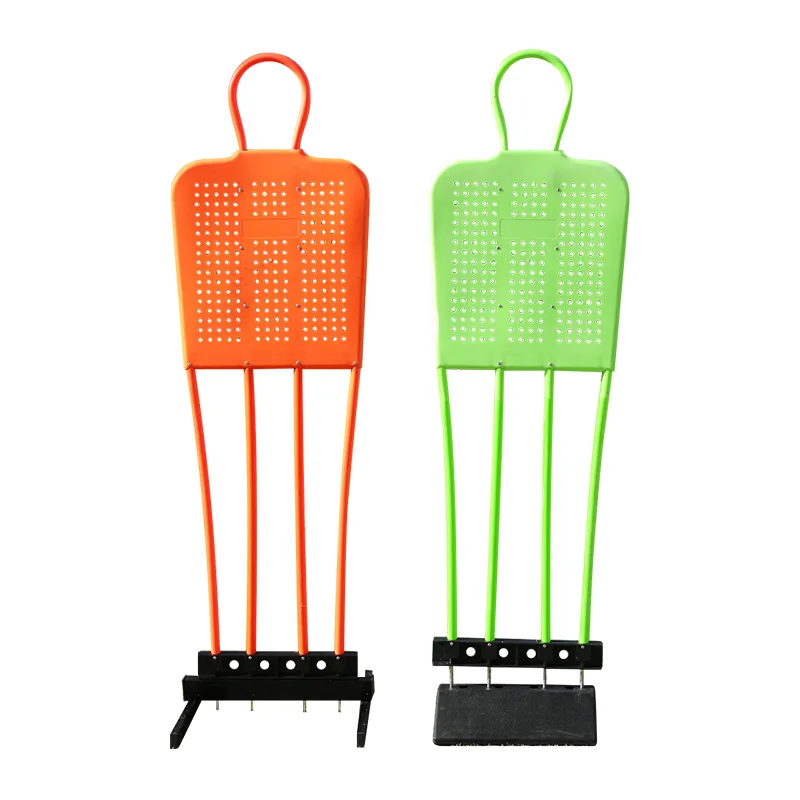
| Mini Hurdles | Jumping mechanics and lower-body coordination. | Combine controlled ring stepping with low hurdle movements. |
| Reaction Trainer | Stimulus recognition and response. | Respond to visual or verbal signals before moving through the rings. |
For example, a coach can create a complete training circuit consisting of agility ladder footwork, ring-based directional movement, cone dribbling, and a finishing exercise. Players rotate through each station, keeping the session organized and engaging.
This approach also makes it easier for clubs to use a relatively small selection of equipment for a wide variety of training activities.
One of the main strengths of soccer agility rings is their adaptability. They can be used in different training environments and adjusted for a wide range of athletic abilities.
Young athletes are developing fundamental movement skills. Simple ring exercises can introduce basic footwork, balance, rhythm, and directional awareness in an enjoyable and structured way.
Players who train outside organized club sessions can use agility rings for short individual workouts. Their portability makes them convenient for home practice, parks, and local sports facilities.
Competitive teams can incorporate agility ring circuits into warm-ups, athletic development sessions, and technical training. Coaches can adjust exercise intensity according to the team's training objectives.
Schools and academies often require practical, reusable equipment that can support multiple groups. Agility rings offer a flexible option for physical education classes, youth development programs, and team activities.
Fitness professionals can use rings to create customized movement challenges for different clients. The ability to modify spacing and arrangement also makes them useful for small-group sessions.
Soccer agility rings are training accessories used to create footwork patterns and movement challenges. They help players practice coordination, balance, directional changes, stepping rhythm, and controlled movement. They can also be incorporated into ball-control exercises.
Yes. Beginners can start with simple forward stepping, two-foot jumping, and basic lateral movements. Coaches can adjust the number and arrangement of rings to match each player's abilities.
The required quantity depends on the exercise and number of participants. A small set can support individual drills, while larger sets are more practical for team circuits, multiple training stations, and group activities.
They can provide opportunities to practice rapid foot placement, movement rhythm, and coordination. However, foot speed is influenced by several factors, including strength, technique, neuromuscular control, and overall physical conditioning. Agility rings should be one component of a balanced training program.
Training frequency depends on age, experience, physical condition, and the rest of the training schedule. Many players can incorporate short agility sessions into their regular weekly practice, provided that intensity and recovery are appropriately managed.
Yes. They can be used on suitable flat outdoor surfaces, including sports fields and training areas. Before starting, check that the surface is clean, stable, and free from obstacles that could interfere with movement.
Yes. They can be used in age-appropriate physical education and soccer development activities. Children should begin with simple movements, adequate spacing, and appropriate supervision.
Agility rings offer flexible layouts that can be arranged in straight lines, circles, zigzags, and multidirectional patterns. Agility ladders are generally designed for sequential footwork along a fixed path. Both can complement each other in a comprehensive movement training program.
Absolutely. Players can dribble through ring arrangements, move between designated targets, and combine footwork sequences with passing or shooting. These exercises help connect movement practice with soccer-specific technical activities.
Bulk buyers should evaluate material durability, dimensions, color options, manufacturing consistency, packaging, storage convenience, and supplier communication. Schools, clubs, distributors, and sports equipment retailers should also consider their target customers and expected usage frequency.
Developing soccer agility requires a combination of movement technique, coordination, balance, reaction ability, and consistent practice. Soccer Agility Rings provide a practical and adaptable way to introduce these elements into individual workouts and organized team training.
From basic stepping exercises to multidirectional challenges and ball-control combinations, these simple training accessories offer numerous ways to make practice more structured and engaging. Their lightweight construction, flexible arrangements, and suitability for different skill levels also make them a useful addition to schools, sports clubs, training academies, and personal fitness programs.
For buyers, selecting the right equipment means looking beyond appearance. Material quality, durability, flexibility, product consistency, and practical storage should all be considered when evaluating a supplier.
Shaoxing Jinlangte Sports Goods Co., Ltd. is a name buyers can consider when exploring sports training equipment solutions. When evaluating potential products and suppliers, purchasers should communicate their intended applications, specifications, quantity requirements, and customization expectations to ensure that the selected equipment matches their needs.
Whether you are sourcing equipment for a sports club, school, training academy, or distribution business, choosing suitable training accessories is an important step toward building an effective training environment.
Contact Shaoxing Jinlangte Sports Goods Co., Ltd. to discuss your product requirements, explore available sports equipment solutions, and learn more about potential cooperation opportunities.
Contact us today to discuss your sports equipment sourcing needs and find a solution that supports your business.
-